

Restaurant Insurance in Illinois

Get the right restaurant insurance coverage in Illinois, including Chicago, Aurora, Naperville, and surrounding areas. We compare multiple A-rated carriers to find you the best rates on liquor liability, property, workers' comp, and more.

🍺 Liquor Liability Specialists📝 Lease-Reviewed Coverage🎥 Video Quote Review
Get Restaurant Coverage in Illinois

Takes ~2 minutes · We review your lease · Coverage matched to your requirements

5-Star Rated on Google — Policies Serviced by Direct Insurance Services

I run a snow plow removal business and my old insurance provider dropped my coverage!! They got everything sorted out and I was insured the same day. These guys know how to help, use them!!

Jessica K., Google Review

A-Rated Carriers Only
Lease-Reviewed Coverage
Licensed in 29 States
Liquor Liability Experts

Restaurant Insurance Case Studies

Anonymized examples of policy reviews Patrick has completed for restaurants across Illinois and other states.

Full-Service Restaurant

Single Location — Lease-Based Operation

The Situation

Restaurant operator received a renewal notice from the landlord requiring updated insurance documentation. The existing policy did not match a waiver of subrogation requirement in the lease, and the tenant-improvements coverage was structured as if the landlord owned the build-out — leaving the operator's renovation investment uninsured.

What We Did

Read the lease line by line against the existing policy. Identified the waiver of subrogation gap and the tenant-improvements ownership mismatch. Restructured the property coverage so the operator's actual investment in the build-out was covered, and added the waiver to match lease language.

The Outcome

Replaced coverage matching the lease requirements exactly. Landlord cleared the new COI in two days. The operator's renovation investment is now properly insured under their own policy.

Bar / Nightlife Operator

Liquor-Heavy Single Location

The Situation

Bar operator's existing policy carried a liquor liability sublimit substantially below the limits typically required to defend a serious over-service or assault claim. The sublimit had never been explained to the operator, and the broker's renewal had carried it forward year over year without conversation.

What We Did

Documented the sublimit gap in writing against typical claim cost ranges in liquor liability case law. Sourced carriers willing to write the operator's class with full-aggregate liquor liability rather than a sublimit, including assault and battery extensions.

The Outcome

Replaced coverage with a carrier writing full-aggregate liquor liability. Premium increased to match the real exposure, but the operator now has coverage that would actually respond to the claim type the business is most exposed to.

Food Truck Operator

Multi-Site Mobile Food Operation

The Situation

Food truck operator was scaling into a commissary kitchen requiring specific insurance endorsements — additional insured, waiver of subrogation, and primary/non-contributory wording — to access the facility. The existing policy was a generic small-business policy missing all three.

What We Did

Pulled the commissary contract's exact insurance schedule. Built policy specifications to match every endorsement, including the additional insured wording specific to the commissary's parent company. Quoted with carriers willing to write food trucks with full commercial endorsement support.

The Outcome

COI cleared on first submission. Operator gained access to the commissary kitchen and was able to scale into a second cart-route without another COI rebuild.

We Review Your Lease & Liquor Requirements Before You Bind

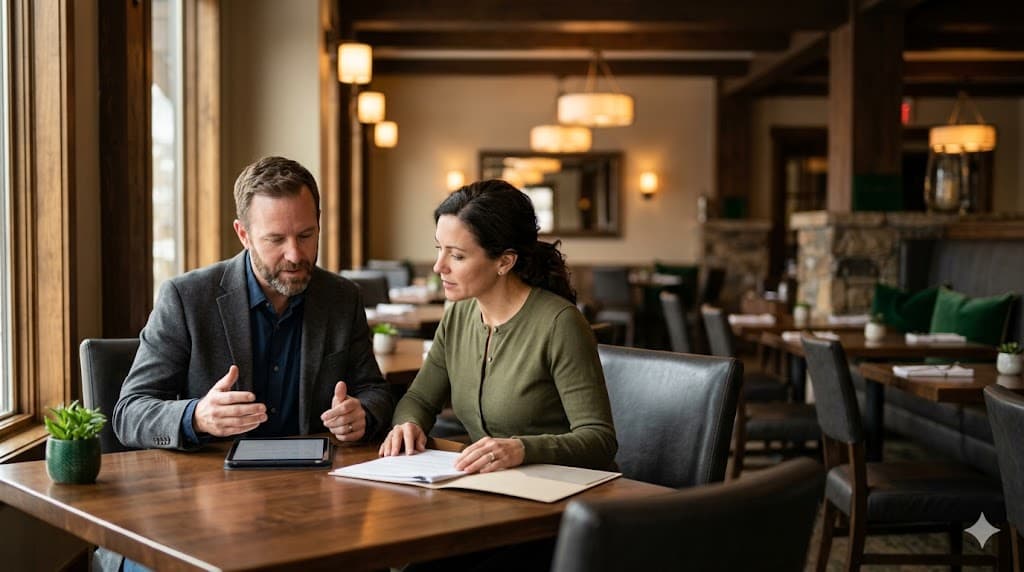
Most restaurant insurance agents quote a policy without ever reading your lease or checking your state's liquor authority requirements. We do both before we quote — so your coverage passes every inspection the first time.

Lease insurance requirements reviewed (limits, endorsements, additional insured language)
State liquor authority minimums confirmed for your license type
Additional insured endorsement matches landlord's exact requirements
Business interruption coverage meets lender requirements (SBA, conventional)
Equipment schedule reflects your actual kitchen buildout value
Workers comp certificate ready for health department and liquor board

Common Restaurant Insurance Compliance Failures We Prevent

These are the most common ways restaurant owners get flagged by landlords, liquor boards, lenders, and health departments. We catch all of them before you bind.

Landlord rejects certificate — limits don't match lease requirements
Liquor license delayed — policy doesn't meet state liquor liability minimums
SBA lender won't close — business interruption coverage missing from policy
Health department flags missing workers comp certificate at inspection
Landlord requires additional insured and tenant's policy doesn't include it
Equipment underinsured — actual kitchen buildout exceeds policy schedule by $100K+

We review your lease, your liquor license requirements, and your lender requirements BEFORE quoting — so your policy is compliant from day one. No rejected certificates. No delayed openings.

Get Restaurant Coverage in Illinois

Watch: Restaurant Insurance Explained

Everything you need to know about restaurant coverage — in under 2 minutes.

Restaurant Insurance Coverage in Illinois

The right restaurant insurance program combines multiple coverage types to protect every angle of your Illinois operation — from the kitchen to the bar to the delivery route.

ESSENTIAL
🛡️

General Liability

Covers bodily injury, property damage, and foodborne illness claims at your Illinois restaurant. Chicago's dense foot traffic and high litigation rates make adequate GL limits critical for any food service operation.

  • Customer slips on icy Chicago sidewalk outside restaurant
  • Diner allergic reaction at Naperville Italian restaurant
  • Falling icicle from awning injures patron entering bistro
ESSENTIAL
🏗️

Property Insurance

Protects your building, kitchen equipment, and inventory. Illinois' severe winters, frozen pipe risk, and basement flooding from Chicago's aging sewer system make water damage and sewer backup coverage essential additions.

  • Lake Michigan storm surge floods Streeterville restaurant
  • Tornado damages Springfield strip mall restaurant
  • Burst pipe during -20 degree cold snap floods dining room
CRITICAL
🍺

Liquor Liability

Illinois' Dram Shop Act imposes STRICT LIABILITY on establishments that serve alcohol — no negligence required. This is one of the strongest dram shop statutes in the country, making liquor liability absolutely essential.

  • Overserved Cubs fan causes crash leaving Wrigleyville bar
  • Bartender serves minor at Chicago River rooftop lounge
  • Intoxicated patron falls down stairs at Gold Coast restaurant
👷

Workers' Compensation

Required for all Illinois employers with no exceptions. Illinois' generous workers' comp benefit structure means restaurant premiums are above the national average. Shopping carriers aggressively is critical to controlling costs.

  • Line cook slips on greasy floor during busy dinner service
  • Delivery cyclist hit by car in Loop traffic during lunch rush
  • Dishwasher burns hand on industrial sanitizer solution
HIGH PRIORITY
⚖️

Employment Practices Liability (EPLI)

Illinois' BIPA litigation explosion has made EPLI coverage near-essential for any restaurant using fingerprint time clocks. A single BIPA class action can generate millions in penalties across your entire workforce.

  • Server files harassment claim at downtown Chicago steakhouse
  • Kitchen worker alleges racial discrimination at Evanston cafe
  • Manager fires employee for requesting FMLA leave
🔧

Equipment Breakdown

Covers mechanical and electrical failure of commercial kitchen equipment. Chicago restaurants with high-volume operations run equipment at maximum capacity during peak service, increasing breakdown frequency and repair costs. Also covers food spoilage when refrigeration or freezer equipment fails — a critical protection for restaurants that can lose thousands in inventory overnight.

  • Boiler failure shuts restaurant during January deep freeze
  • Grease trap backs up into dining room during Friday rush
  • Commercial dishwasher floods kitchen during Saturday brunch
Get Restaurant Coverage in Illinois

Takes ~2 minutes · We review your lease · Coverage matched to your requirements

What Drives Your Restaurant Insurance Premium in Illinois

Commercial insurance pricing depends on dozens of factors specific to your restaurant. Here’s what drives premiums up or down — and why generic “starting at $X/month” quotes almost always fail to match your actual risk.

FactorWhy It Matters
Alcohol sales percentageLargest liquor liability driver — 3–5x swing
Seating capacityMajor GL driver
Late-night operations (after midnight)40–100% premium swing
Claims history (last 5 years)30–100%+ swing
Delivery operations (in-house vs third-party)Adds commercial auto/HNOA exposure
Cooking equipment and fire suppression20–50% property swing
Building type and age20–60% swing
Location type (strip mall vs standalone vs mixed-use)15–40% swing
Number of employeesScales WC linearly
Business interruption limits selectedAffects premium significantly
Liquor license type and limitsDetermines required liquor liability limits
Previous violations (health dept, liquor board)25–75% swing

A complete restaurant insurance program typically includes these policies:

PolicyWhat It CoversTypical Limits
General LiabilitySlip-and-fall, property damage$1M/$2M minimum
Liquor LiabilityAlcohol-related claims (required if serving alcohol)$1M minimum, often higher
Commercial Property & BIBuilding, equipment, income loss from covered events100% replacement cost + 12–18 months BI
Workers CompensationEmployee injuriesState statutory minimums
Equipment BreakdownMechanical/electrical failures of kitchen equipment$100K–$250K
Commercial Auto + HNOADelivery vehicles and employee personal vehicles$1M combined single limit

Every restaurant is different. Rather than guess at your premium from a generic table, get a real review from a licensed agent who understands restaurant risk.

Get Restaurant Coverage in Illinois

Want to Know Your Exact Cost?

The numbers above are estimates. Get real quotes for your specific restaurant — takes about 2 minutes.

🧮

Free Restaurant Insurance Risk Calculator

Find the coverage gaps that could close your doors

Most restaurants have a liquor liability gap, a BI shortfall, or a delivery exposure they don't know about. Take 60 seconds to check.

Did you know? 75% of restaurants that close after major loss without adequate BI coverage never reopen

FreeNo email required60 seconds10 questions

Restaurant Types We Insure in Illinois

Every restaurant has different risks. We match your type to the right carrier and coverage program.

🍽️

Full Service Restaurants

🍺

Bars & Nightclubs

🚚

Food Trucks

🍕

Fast Casual / Quick Service

👻

Ghost Kitchens

🍰

Bakeries & Cafes

Coffee Shops

🏨

Hotel Restaurants

🍱

Catering Companies

🏪

Food Halls & Food Courts

🍦

Ice Cream & Dessert Shops

🍷

Wine Bars & Tasting Rooms

8 Mistakes That Cost Illinois Restaurant Owners Six Figures

These are the coverage gaps we see over and over. How many of them apply to your restaurant?

1

🚨 If a Customer Slips in Your Parking Lot, Who Gets Sued — You or Your Landlord?

Your lease probably says the landlord is responsible for common areas, but their insurer will deny the claim and point at you. Your insurer will deny it and point at them. Meanwhile, you're the one being sued. Do you know whether your GL policy covers slip-and-fall incidents on the sidewalk and parking lot outside your restaurant, or are you assuming someone else is handling that risk?

2

🍺 Do You Know If Your GL Policy Excludes Alcohol Claims?

What happens if an overserved customer gets into a DUI accident leaving your restaurant? Your GL policy almost certainly excludes that claim — and you could be personally liable. When was the last time your agent walked you through exactly what your policy excludes?

3

🔥 When Your Kitchen Closes for 3 Months, What Pays Your Rent?

A grease fire, a plumbing failure, or a health department shutdown can close your restaurant for weeks. Do you have business interruption coverage that actually replaces your lost revenue — or is it capped at an amount that won't cover even one month of rent, wages, and inventory?

4

📋 Does Your Lease Require Coverage You Don't Actually Have?

Most commercial leases have specific insurance requirements buried in the fine print — limits, additional insured endorsements, waivers of subrogation. When was the last time someone cross-checked your policy against your actual lease? What happens if your landlord audits your COI and finds a gap?

5

❄️ What Happens When Your Walk-In Fails at 2am?

Your walk-in cooler dies overnight and $18,000 of inventory is lost by morning. Does your policy cover food spoilage from equipment breakdown — or only from power outages? Most restaurant owners find out the answer the hard way.

6

👥 Have You Thought About What a Wage & Hour Lawsuit Would Cost You?

Employment lawsuits are the fastest-growing claim type for restaurants — wage and hour disputes, harassment claims, wrongful termination. Does your current policy include Employment Practices Liability (EPLI)? If not, you're paying legal fees and settlements out of pocket.

7

🚗 Who's Covered When Your Delivery Driver Crashes Their Own Car?

If your restaurant does deliveries — even third-party — and your driver is at fault in an accident, are you protected? Hired and non-owned auto coverage is cheap, but most restaurant policies don't include it by default. What happens when the lawsuit names your restaurant?

8

📉 When Was the Last Time Anyone Reviewed Your Coverage Against Your Actual Risk?

Your restaurant has changed since you first bought your policy — new menu, more seats, expanded hours, maybe a liquor license. Has your coverage kept up? Most restaurant owners are paying for coverage that doesn't match their current business and missing coverage that does.

See How We Review Your Coverage

Watch Patrick walk through a real commercial policy review on video — so you know exactly what you're buying before you commit.

The Illinois Restaurant Market

Illinois' restaurant industry is dominated by Chicago, one of the most important dining cities in the world. Chicago's culinary identity is built on iconic traditions — deep-dish pizza, Italian beef, Chicago-style hot dogs, and Polish sausage — but the city has evolved into a global dining destination with more Michelin-starred restaurants than any U.S. city outside New York. Neighborhoods like Fulton Market, West Loop, Wicker Park, Logan Square, and Pilsen each sustain thriving, distinct restaurant ecosystems with their own identities.

Fulton Market's transformation from a meatpacking district to Chicago's premier dining destination has been one of the most dramatic restaurant neighborhood evolutions in the country. Restaurants in this corridor invest millions in buildouts and compete at the highest level nationally. The West Loop's concentration of high-profile restaurants generates enormous foot traffic and corresponding insurance exposure. Beyond the trendy neighborhoods, Chicago's neighborhood restaurant culture — corner taverns, family-owned ethnic restaurants in Bridgeport, Chinatown, and Little Village — represents a massive segment of the market that requires affordable, practical insurance solutions.

Outside Chicago, the Illinois restaurant landscape includes the suburban restaurant corridors along the I-88 and I-355 corridors in DuPage and Will counties, college-town dining in Champaign-Urbana and Normal-Bloomington, and the state capital dining scene in Springfield. The downstate Illinois market is fundamentally different from Chicago — smaller operations, lower rents, but the same regulatory requirements and many of the same insurance exposures.

📍Chicago Loop & Downtown
📍Chicago Neighborhoods (West Loop, Wicker Park, Logan Square)
📍North Shore Suburbs (Evanston, Wilmette, Highland Park)
📍DuPage County (Naperville, Wheaton, Oak Brook)
📍Will County (Joliet, Plainfield, Romeoville)
📍Rockford & Northern Illinois
📍Springfield & Central Illinois
📍Champaign-Urbana & East Central Illinois

Weather & Natural Disaster Risks for Illinois Restaurants

Illinois restaurants face significant weather risks across multiple categories. Chicago and Northern Illinois experience severe winter weather including heavy snowfall, ice storms, and extreme cold that can disrupt operations for days. The polar vortex events of 2014 and 2019 brought wind chills below -50F to Chicago, forcing widespread restaurant closures and causing frozen pipe bursts that resulted in massive water damage claims. Winter weather is the most consistent annual risk for Illinois restaurants, and adequate property insurance with water damage coverage is essential.

Severe thunderstorms and tornadoes are a significant warm-season risk across the state. The Central and Southern Illinois tornado corridor experiences multiple severe weather events each spring and summer. Chicago itself faces severe thunderstorm risk, and the city's dense urban environment means that wind damage, hail, and flooding from overwhelmed storm sewer systems can affect hundreds of restaurants simultaneously. The August 2020 derecho caused widespread damage across the Chicago suburbs and downstate communities.

Flooding is a recurring risk in Illinois, particularly along the Chicago River system, the Des Plaines River, and the Mississippi and Illinois river systems downstate. Chicago's aging combined sewer system means that heavy rainfall events routinely cause basement flooding in older commercial buildings — a significant property damage risk for restaurants with basement storage, prep areas, or dining rooms. Illinois restaurants should confirm that their property policies include adequate water damage and sewer backup coverage.

Illinois Liquor Liability & Dram Shop Laws

Illinois has one of the strongest dram shop statutes in the country, codified in the Illinois Dram Shop Act (235 ILCS 5/6-21). The act imposes strict liability — not negligence-based liability — on licensed establishments for injuries or damages caused by intoxicated patrons. This means a plaintiff does not need to prove the bar or restaurant was negligent in serving the patron; they only need to prove the patron was served alcohol at the establishment and that the intoxication caused the injury or damage.

The Illinois Dram Shop Act also creates a separate cause of action for "loss of means of support" — allowing a spouse, child, parent, or other dependent of a person injured by an intoxicated individual to sue the establishment for their own damages. This doubles the potential exposure from a single incident. Illinois courts have consistently upheld the strict liability standard, and damages are not capped by statute, though the state publishes annual adjusted damage limits for dram shop claims (currently over $70,000 for personal injury and $80,000 for property damage per occurrence, adjusted annually for inflation).

Chicago and many suburban municipalities impose additional local liquor license requirements on top of state law. The City of Chicago's liquor license application process includes proof of liquor liability insurance, and the Mayor's License Commission can revoke licenses for repeated violations. Illinois' strict liability framework makes liquor liability insurance absolutely essential — without it, a single dram shop claim can bankrupt a restaurant or bar owner, as personal assets are exposed if the business cannot pay a judgment.

Operating without liquor liability insurance in Illinois means a single alcohol-related incident could result in a lawsuit that exceeds your ability to pay — exposing your personal assets and permanently closing your business.

What Drives Restaurant Insurance Costs in Illinois?

These factors have the biggest impact on what you pay. Understanding them helps you control costs and avoid surprises at renewal.

🍺

Alcohol Sales %

Chicago's bar and tavern culture means many establishments derive 50-70% of revenue from alcohol. Illinois' strict liability dram shop statute makes high alcohol sales the single most expensive risk factor for Illinois restaurant insurance.

🪑

Seating Capacity

High-volume Chicago restaurants in Fulton Market, River North, and the West Loop can seat 200-400+ guests. Large-format operations face proportionally higher GL, workers' comp, and liquor liability exposure.

🌙

Late-Night Hours

Chicago's 4:00 AM and 5:00 AM late-night liquor licenses create maximum liquor liability exposure. Establishments operating under late-night licenses in Wrigleyville, River North, or Rush Street pay the highest tier of liability premiums in the state.

📊

Claims History

Illinois' plaintiff-friendly courts and strict liability dram shop statute mean claims are litigated aggressively and settled at higher values than many states. A single dram shop claim can increase premiums 50%+ and severely limit carrier options.

🚗

Delivery Exposure

Chicago's congested streets, extreme winter driving conditions, and high delivery demand create elevated commercial auto exposure. Restaurants operating in-house delivery face significant hired/non-owned auto liability, especially during Chicago winters.

Illinois Health Department & Food Safety Compliance

Illinois restaurant health and safety compliance is governed by the Illinois Food Service Sanitation Code and enforced at the local level by certified local health departments. The Illinois Department of Public Health (IDPH) sets statewide standards and certifies local enforcement agencies, but inspection frequency, scoring systems, and enforcement approaches vary by jurisdiction.

The City of Chicago's Department of Public Health operates one of the most active restaurant inspection programs in the country. Chicago inspections are risk-based, with high-risk establishments (those serving alcohol, operating buffets, or handling raw proteins) inspected more frequently. Inspection results are publicly available through the Chicago Data Portal, and critical violations can result in immediate closure, fines, and referral to the city's License Commission. The public availability of inspection data means food safety violations can cause immediate, measurable revenue impact through social media and review platform amplification.

Illinois requires a Certified Food Service Manager (CFSM) at every food service establishment, and the certificate must be renewed every five years. All food handlers must complete an approved food handler training course. Illinois also requires food allergen awareness training for food service workers, reflecting the growing importance of allergen management in restaurant operations. The state's seasonal outdoor dining regulations — particularly Chicago's patio and sidewalk cafe permitting process — add additional compliance requirements for restaurants with outdoor service.

What We Review Before Quoting

The information we review with you during your policy consultation.

🍺Alcohol served? (Yes/No + % of revenue)
👥Employee count & approximate annual payroll
💰Annual sales range (gross revenue)
🚚Delivery operations? (In-house or third-party)
📋Current policy info or loss history

Don't have everything? No problem — start the form and we'll review what we need together.

Get Restaurant Coverage in Illinois

Takes ~2 minutes · We review your lease · Coverage matched to your requirements

Bobby Friel, Partner at Direct Insurance Services

Bobby Friel

Partner, Direct Insurance Services

Why Illinois Restaurants Choose Us

🍺

Liquor Liability Expertise

We specialize in high-risk liquor liability underwriting — bars, breweries, nightclubs, and restaurants with high alcohol sales percentages across Illinois.

🎥

Video Quote Review

We walk you through your options on video in plain English — limits, exclusions, what matters for your operation — so you understand what you are buying.

📋

Lease & License Review

We review your commercial lease and Illinois liquor license requirements to confirm your policy satisfies every insurance requirement before you bind.

📝

Lease-Ready Coverage

We review your lease, liquor license, and landlord requirements before quoting — so your Illinois restaurant policy matches what your space actually requires.

Restaurant Insurance in Nearby States

We also write restaurant insurance in these states near Illinois. Liquor liability laws, health department requirements, and insurance regulations vary by state.

Restaurant Insurance by State

Restaurant insurance requirements, liquor liability laws, and dram shop statutes vary significantly by state. Select a state to learn about local requirements and coverage options.

Want to Go Deeper?

Read the Complete Restaurant Insurance Guide

A comprehensive 5,000-word guide covering liquor liability, business interruption, delivery coverage, lease requirements, and a real $291K kitchen fire case study. Free, no email required.

Read the Full Guide →

~5,000 words · 15 min read

Illinois Restaurant Insurance FAQs

The Illinois Dram Shop Act (235 ILCS 5/6-21) imposes strict liability on licensed establishments for injuries caused by intoxicated patrons. Unlike most states, Illinois does not require proof of negligence — if a patron was served alcohol at your establishment and their intoxication caused injury to a third party, your establishment is liable. The act also allows dependents of injured parties to sue for "loss of means of support." This strict liability standard makes liquor liability insurance absolutely essential for any Illinois bar or restaurant serving alcohol.

Chicago restaurant insurance tends to be more expensive than downstate Illinois due to higher property values, greater foot traffic, and more active litigation. A small cafe in a Chicago neighborhood might pay $8,000-$15,000 per year. A mid-size restaurant with alcohol service in the West Loop or River North typically ranges from $20,000-$50,000. Bars and late-night establishments in Wrigleyville or Rush Street can pay $40,000-$100,000+ depending on license type, hours, and claims history. Suburban restaurants generally cost 15-30% less than equivalent Chicago operations.

The Biometric Information Privacy Act (BIPA) regulates the collection and storage of biometric identifiers, including fingerprints. Hundreds of Illinois restaurants use fingerprint-based time clocks for employee time tracking. BIPA requires written consent before collecting biometric data and imposes penalties of $1,000 per negligent violation and $5,000 per intentional violation. Class action lawsuits against restaurant groups using fingerprint time clocks without proper consent have resulted in multi-million dollar settlements. EPLI coverage that includes BIPA exposure is critical for any Illinois restaurant using biometric systems.

Yes. The City of Chicago requires proof of liquor liability insurance as part of the liquor license application and renewal process. The Mayor's License Commission sets minimum coverage requirements, and failure to maintain required insurance can result in license suspension or revocation. Different license categories (tavern, restaurant, late-night, consumption on premises incidental) have different requirements. Most Chicago landlords also require $1-2 million in liquor liability coverage as a lease condition, particularly in high-traffic neighborhoods.

Chicago's severe winters create several insurance-related risks. Frozen pipe bursts are a leading cause of commercial property claims in the city, and restaurants with older plumbing or in older buildings are particularly vulnerable. Winter storms can force multi-day closures, and ice and snow accumulation on sidewalks creates slip-and-fall liability exposure. Property insurance should include water damage and sewer backup coverage. Business interruption coverage protects revenue during weather-forced closures. Many Chicago insurers also look at a restaurant's snow removal practices when evaluating liability risk.

Generally, yes. Downstate Illinois restaurants in Springfield, Champaign, Rockford, and smaller communities typically pay 15-30% less for equivalent coverage compared to Chicago. Lower property values, less litigation activity, reduced foot traffic, and lower crime rates all contribute to lower premiums. However, downstate restaurants still face the same state-level regulatory requirements — workers' comp, the Dram Shop Act, BIPA, and food safety regulations apply equally throughout the state.

Chicago's sidewalk cafe and expanded outdoor dining programs require specific permits and often trigger additional insurance requirements. The city requires proof of general liability insurance for sidewalk cafe permits, and landlords may require additional insured endorsements for outdoor dining areas. Outdoor dining infrastructure (heaters, furniture, barriers, temporary structures) needs to be covered under your property policy. Seasonal operations that set up and tear down outdoor dining annually face theft and weather damage risks during transition periods.

Chicago's food hall and ghost kitchen market has grown significantly. Food halls like Revival Food Hall and Time Out Market involve shared spaces with complex insurance arrangements — you need your own GL and workers' comp, but property coverage may be partially handled by the food hall operator. Ghost kitchens (delivery-only operations) need GL, property, workers' comp, and commercial auto or hired/non-owned auto coverage for delivery operations. The lease or license agreement for your food hall or ghost kitchen space will specify exact insurance requirements.

Ready When You Are

We compare carriers, verify your lease and liquor license requirements, and walk you through your options for Illinois restaurant coverage.

Get Restaurant Coverage

Takes ~2 minutes · We review your requirements · Coverage matched to your contracts

No obligation · Free quotes · Licensed in 29 States