Do Restaurants Need Liquor Liability? Yes — Here's Why

Last updated: May 26, 2026
Key Takeaway
Liquor liability is the line item that fills the alcohol exclusion every commercial GL writes by default. If your restaurant serves any alcohol — including beer and wine — your general liability policy will NOT respond to dram shop claims, over-service injuries, or assault and battery claims with alcohol as a contributing factor. The standalone liquor liability policy fills that gap. What it covers, when you need it, and what to verify on the policy form before the next renewal.
Do restaurants need liquor liability insurance?
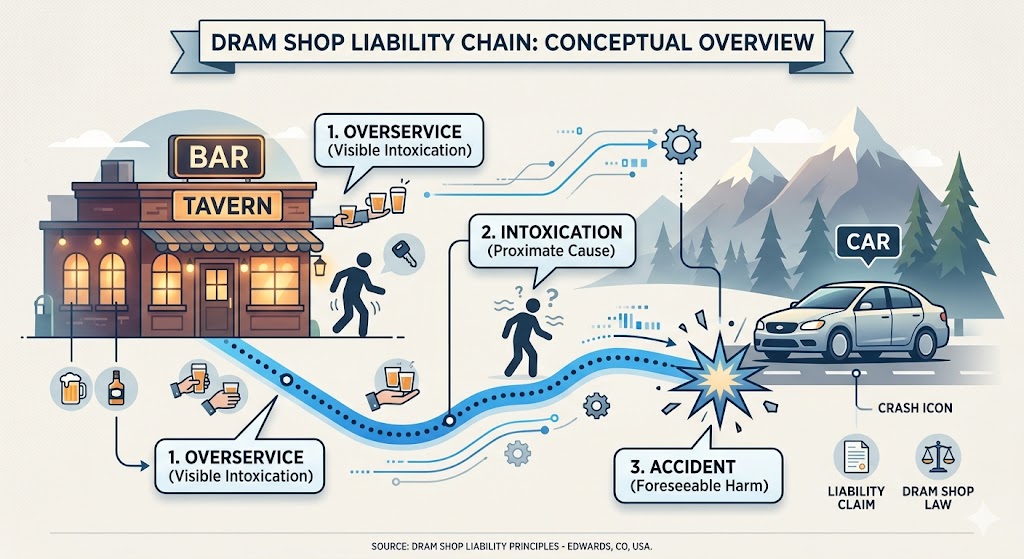
Yes. If your restaurant serves any alcohol — including beer and wine — you need liquor liability insurance. General liability policies carry an alcohol exclusion that removes coverage for any claim arising from the manufacturing, serving, selling, or furnishing of alcohol. That leaves you exposed to dram shop lawsuits, DUI-related claims, over-service injuries, and assault and battery claims with alcohol as a contributing factor. Most states with dram shop laws hold restaurants legally responsible for damages caused by intoxicated patrons they served.
FOR RESTAURANTS
Every commercial GL excludes alcohol. If you serve, you have a hole.
Every commercial general liability policy excludes alcohol-related claims by default. If you serve alcohol — even beer and wine — and someone files a dram shop claim, your GL doesn't respond. The exposure is fully personal until liquor liability fills the gap. Most restaurant owners don't realize the exclusion exists until the claim is already at the door.
Every Commercial GL Excludes Alcohol. If You Serve, You Have a Hole.
Every commercial general liability policy excludes alcohol-related claims by default. If you serve alcohol — even just beer and wine — and someone files a dram shop claim, your GL doesn't respond. The exposure is fully personal until liquor liability fills the gap. Most restaurant owners don't realize the exclusion exists until the claim is already at the door.
The alcohol exclusion is broad. If a patron gets into a fight after drinking, the GL insurer can deny based on the exclusion. If a customer trips and falls after drinking, same result. If a regular settles up after a long evening, drives home, and causes harm — the lawsuit names the restaurant, and the GL policy doesn't answer. For the broader restaurant insurance program context and where liquor liability fits, see our restaurant insurance cost breakdown.
42 + DC
states (plus District of Columbia) with dram shop liability laws on the books — the legal framework that makes liquor liability coverage operationally non-optional in nearly every U.S. market
NCSL / industry compilation of state dram shop statutes, 2025
1M+
restaurant locations in the U.S. — the universe of operators carrying the alcohol exclusion built into every commercial GL by default
National Restaurant Association, 2025 State of the Restaurant Industry
15.9M
total restaurant and foodservice employment in the U.S. by year-end 2025 — the staff making the bartender judgment calls that liquor liability ultimately defends
National Restaurant Association, 2025 State of the Restaurant Industry
What Liquor Liability Actually Covers
Liquor liability — sometimes called dram shop insurance — covers four specific exposures the standard GL alcohol exclusion removes. The card grid below maps each one.
01
🤕Bodily Injury Caused by Intoxicated Patrons
When a patron you served gets in a car accident and injures or kills someone, the liquor liability policy responds. This is the dram shop claim — the lawsuit names the restaurant, alleging negligent over-service, and the policy provides defense and indemnity.
02
🏚️Property Damage from Intoxicated Patrons
When an intoxicated patron damages someone else's property — stumbles into a parked car in the lot, knocks over equipment on the way out — the policy covers the property damage claim. Lower frequency than bodily injury but a legitimate covered cause.
03
👊Assault and Battery (Alcohol-Contributing)
When a bar fight or alcohol-driven altercation results in injury, the policy covers the defense and indemnity. The GL's alcohol exclusion would deny these claims; liquor liability is purpose-built to respond. Important especially for sports bars, nightclubs, and late-night venues.
04
⚖️Legal Defense Costs
The policy covers attorney fees, court costs, settlements, and judgments up to the policy limits. Defense costs are typically standalone of the limit on most forms — meaning the policy pays defense without eroding the indemnity limit. On a serious dram shop claim, defense alone can run six figures.
The policy pays for legal defense costs, settlements, and judgments up to your policy limits. Most restaurants carry $300,000 to $1,000,000 in liquor liability limits, with higher-volume bars and nightclubs carrying more. Defense costs are typically standalone of the limit on most forms — meaning the policy pays defense without eroding the indemnity limit.
What Drives Your Liquor Liability Premium
Liquor liability premiums are rated against a defined set of factors specific to alcohol service operations — sales mix, service hours, establishment type, dram shop law severity, claims history. The grid below maps what underwriters actually evaluate.
Premium Drivers
What Drives Your Liquor Liability Premium
Liquor liability pricing is rated against a defined set of factors specific to alcohol service operations. Here's what underwriters actually evaluate when sizing the premium.
| Rating Factor | Impact on Premium | |
|---|---|---|
| Alcohol percentage of revenue | CriticalDominant lever; past 50% alcohol revenue, carrier appetite narrows | |
| Service hours / late-night operations | SignificantPost-midnight service drives premium and narrows carrier appetite | |
| Establishment type (casual dining vs nightclub) | SignificantFine dining vs sports bar vs nightclub all rate very differently | |
| Entertainment license / live music | NotableDJ, dancing, live entertainment add scrutiny and premium | |
| Service staff training (TIPS / ServSafe Alcohol) | NotableCarrier credits available for documented training programs | |
| State dram shop law severity | SignificantTexas, California, Colorado, Illinois all have different statutory triggers | |
| Claims history | CriticalPrior dram shop or over-service claims narrow appetite significantly | |
| Limit selection | Significant$300K vs $1M vs $2M+ scales premium proportionally | |
| GL alcohol exclusion confirmation | NotableThe structural reason liquor liability is a separate policy at all |
No single factor decides the premium. The combination — especially how alcohol percentage interacts with service hours and entertainment license — is what determines whether the renewal matches the operation or pushes the account into specialty markets.
A few notes on how to read the table. Alcohol percentage of revenue is the dominant lever — past 50% alcohol revenue, carrier appetite narrows significantly, and some markets won't write the account at all. Late-night service and entertainment licenses (live music, dancing) drive premium and underwriting scrutiny. Server training (TIPS, ServSafe Alcohol) earns meaningful carrier credits and operationally reduces the over-service exposure that triggers most dram shop claims.
Before the next renewal
Most restaurants don't realize their GL has a built-in alcohol exclusion.
We pull your current GL declarations, confirm the alcohol exclusion language, and walk through what liquor liability adds — and what it excludes when the claim is your bartender's judgment call.
“A standard GL policy has a hole in it exactly the size of a liquor bottle. Liquor liability fills that hole.”
— Bobby Friel · Partner, Direct Insurance Services
Dram Shop Laws Explained Simply
Dram shop laws are state laws that hold alcohol sellers — bars, restaurants, liquor stores — legally liable for injuries caused by the people they serve. The name comes from 18th-century England, where gin was sold by a unit called a "dram," but the laws are very modern and very enforceable.
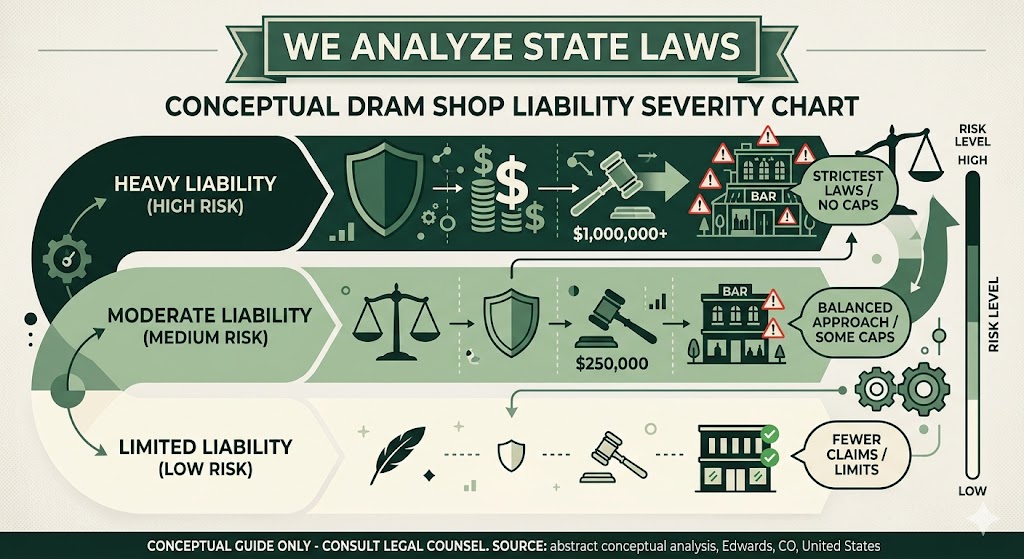
Most states have some version of dram shop liability. In Texas, you can be held liable if you serve someone who is "obviously intoxicated to the extent that he presented a clear danger to himself and others." In California, dram shop liability is more limited — generally only applying to serving minors — but civil lawsuits based on negligence can still hit restaurants hard. In Colorado, both servers and social hosts can be held liable for serving visibly intoxicated persons. Dram shop lawsuits regularly produce six- and seven-figure verdicts. A wrongful death case stemming from a DUI where the driver was over-served can easily reach seven figures. Without liquor liability insurance, those verdicts come directly out of the business — and potentially out of the owner's personal assets.
GL Alone vs. GL + Liquor Liability
The single most consequential coverage decision for any restaurant that serves alcohol is whether liquor liability sits on top of the GL. Five places where that choice shows up:
GL Alone (Every Commercial GL Writes the Alcohol Exclusion)
- ×Alcohol exclusion on every commercial GL by default
- ×No defense allocation for over-service claims
- ×No coverage for assault/battery with alcohol as a factor
- ×Dram shop exposure fully personal
- ×Verdict comes out of business AND personal assets
GL + Liquor Liability
- ✓Alcohol-related bodily injury covered
- ✓Property damage from intoxicated patrons covered
- ✓Assault/battery with alcohol factor covered
- ✓Defense costs typically standalone of the limit
- ✓Business and personal assets shielded by the policy

Restaurant Scenario
OPERATOR SCENARIO
Scenario
Imagine a regular at your restaurant settles up after four hours at the bar, drives home, and causes a fatal accident two miles from your door. The victim's family files suit. They name the driver — and your restaurant.
What we did
What changes for your business — and your personal assets — if your general liability policy carries the standard alcohol exclusion every commercial GL writes by default?
🎯 The Outcome
Could the policy you've been paying for the last three years already have a hole in it the size of a dram shop claim — and the verdict that follows be yours to cover personally?
You Need It Even for Beer and Wine
The most common question we hear: "We only serve beer and wine — do we still need liquor liability?" The answer is absolutely yes. A patron can get just as intoxicated on six pints of IPA as they can on six cocktails. The legal liability is identical regardless of the ABV of what you're serving.
Restaurant owners often assume that because beer and wine are "lighter" than spirits, the risk is lower. From an underwriting perspective, that's partially true — beer-and-wine-only establishments generally pay lower premiums because the overall alcohol revenue tends to be lower and the venue profile is usually lower-risk. But from a legal perspective, dram shop laws make no distinction between types of alcohol. If you over-serve someone and they cause harm, you're liable whether they were drinking craft beer or tequila shots. Liquor liability for beer-and-wine-only restaurants is some of the most affordable coverage in the program — there's no underwriting case for skipping it.
FAQ
Do I need liquor liability if I only serve beer and wine?
Yes. Dram shop laws make no distinction between beer, wine, and spirits. A patron can get just as intoxicated on six pints of beer as on six cocktails — and the legal liability is identical. Beer-and-wine-only establishments generally pay lower premiums because the overall alcohol revenue is lower and the venue profile is typically lower-risk, but the underlying exposure is the same and the policy is one of the most affordable lines in the restaurant program.
What's a dram shop law and which states have them?
Dram shop laws are state laws that hold alcohol sellers legally liable for injuries caused by the people they serve. Most U.S. states have some version of dram shop liability — only a handful of states have no dram shop statute on the books at all. State-by-state severity varies: Texas requires "obvious intoxication" as the trigger, California limits dram shop liability primarily to serving minors, Colorado holds both servers and social hosts liable. The dram shop law in your operating state determines how aggressively a claim can attach to the restaurant.
How is host liquor liability different from regular liquor liability?
Regular (commercial) liquor liability is required when alcohol service is part of the business — restaurants, bars, breweries, taprooms. Host liquor liability is a narrower endorsement that covers businesses where alcohol service is incidental (e.g., a corporate office party, a wedding venue where the wedding party brings alcohol). Host liquor liability often comes bundled into commercial GL forms as a sublimit; commercial liquor liability is a separate policy with materially larger limits. Restaurants need the standalone commercial liquor liability, not host liquor liability.
What does liquor liability NOT cover?
Liquor liability doesn't cover the restaurant's own employees (workers comp), property damage to the restaurant itself (property policy), or claims unrelated to alcohol service (GL). It also generally excludes punitive damages in states where those are not insurable. And it doesn't cover liquor sold without a valid license — if the alcohol service violates the restaurant's liquor license terms, the policy may have a coverage defense. The policy is purpose-built for the alcohol-service liability exposure; everything else in the restaurant program lives on different lines.
The Bottom Line
If you serve alcohol — beer, wine, or full bar — your GL has a built-in alcohol exclusion that doesn't respond to dram shop claims. Liquor liability fills that gap. The conversation worth having isn't whether you need it. It's whether the policy you have actually covers what you'd think it covers when a regular makes a bad decision two miles from your door.
For a full breakdown of every policy your restaurant needs, read our restaurant insurance cost breakdown. If you own your restaurant building, you may also need commercial landlord insurance on top of your restaurant BOP. If you're doing a build-out or renovation, make sure your contractor carries proper insurance with your restaurant named as additional insured. Restaurants in mixed-use buildings with HOA associations have additional coordination requirements.
Opening a new location or expanding? Restaurant equipment financing and working capital loans can help cover the upfront costs. Dram shop laws also vary significantly by state — for Illinois, Georgia, and other state-specific requirements, check our state commercial insurance guides.
Use our restaurant insurance risk calculator to see where the factors land on your operation, then we'll review your current GL for the alcohol exclusion and walk through what liquor liability adds before the next renewal.
The restaurant operator's question
Not "do I need liquor liability." If you serve alcohol, the answer is yes — the GL exclusion is structural, not optional. The right question is "what limit, what carrier, what training credit, and what verification on the policy form before the renewal binds?" The policy is the line that responds when the bartender's judgment call becomes the lawsuit.
About the Author

Bobby Friel
Partner, Direct Insurance Services
Bobby Friel is a partner at Direct Insurance Services, where Patrick Henigan and the licensed team handle all quoting, policy reviews, and binding. Bobby runs the commercial division's marketing, content, and client outreach — helping contractors, HOA boards, restaurant owners, and commercial landlords across 29 states find the right coverage through Insurance Service 365.
Related Coverage
Explore Related Coverage Options
🍽️ The Complete Restaurant Insurance Guide 2026
What every restaurant owner needs to know about liquor liability, business interruption, equipment breakdown, and the lease requirements that blindside operators.
Read the Free Guide →
Ready When You Are
Ready When You Are
No pressure. No obligation. Just real quotes from 30+ carriers, reviewed on video so you understand exactly what you're buying.
Takes ~2 minutes · Contract review included · Video walkthrough on every option