
1
🔥 Wildfire Season Severity
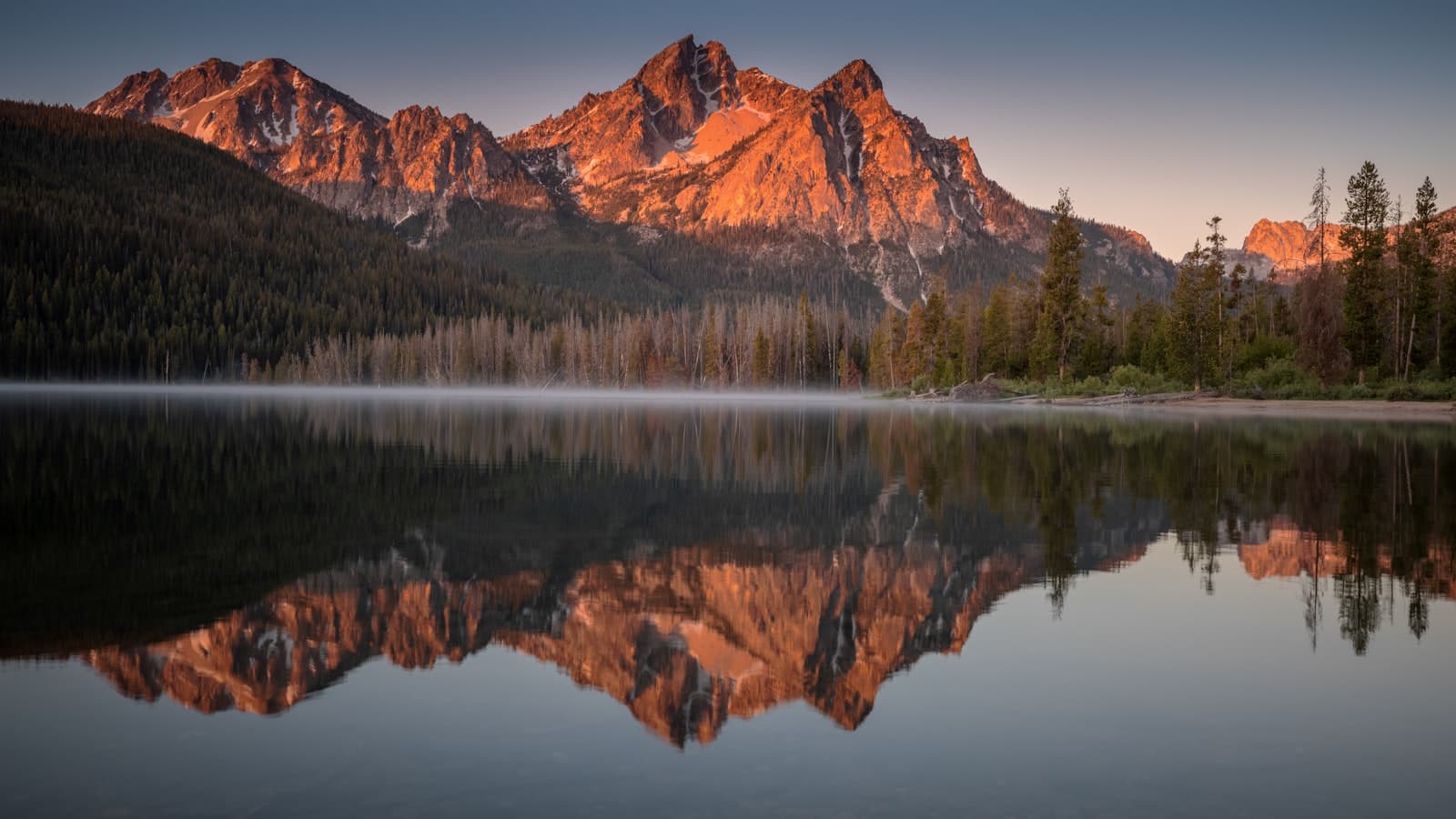
Idaho's extensive forested lands and dry summers produce severe wildfire seasons that threaten businesses in the wildland-urban interface from Boise's foothills to resort communities in Sun Valley and McCall.
Licensed in Idaho (ID)
Reviewed by Patrick Henigan, CIC · Licensed commercial insurance agent · Policies serviced by Direct Insurance Services
Idaho is one of the fastest-growing states in the nation, with a booming Boise metro driving business expansion across technology, construction, and agriculture. Wildfire seasons, harsh winters, and rapid population growth create insurance needs that demand local market expertise.
Takes ~2 minutes · We review your requirements · Coverage matched to your contracts
Operating without proper commercial insurance in Idaho exposes your business to lawsuits, regulatory penalties, and uninsured losses. Idaho requires contractors to register with the Idaho Contractors Board and carry general liability insurance. The state also has specific requirements for public works bonds and insurance certificates for government contracts.

Bobby Friel
Partner, Direct Insurance Services
You know how it is — you're running operations, managing people, watching cash flow, and you don't have time to wonder whether your contracts have ever been read against your active policy line by line. You assume the general liability limit matches what your largest contract requires. You assume the workers' comp classification codes still reflect what your team actually does. You assume the cyber sublimit would cover the ransomware attack your industry is now experiencing. And then a vendor submits a non-compliant COI you can't enforce, or a claim gets denied on a coinsurance penalty, and suddenly you're discovering what the policy actually says.
What we do is map your actual contracts, leases, governing documents, and operational realities to the policy language — before you renew, before a denied claim becomes your problem. On video. So you know exactly how your policy responds.
We bind fast too. As fast as the online quote tools on standard risks. The difference isn't speed — it's that we don't ship coverage with gaps. Is saving 5 to 10 minutes on a generic quote worth gaps that can shut your operation down, drain revenue during a claim dispute, and force cash payouts the policy was supposed to cover?
When was the last time anyone took the time to close your coverage gaps before the bind, not after the claim?
On Video Before Binding
Watch how a real commercial policy review works and how commercial insurance actually responds — before you decide what to bind.
Watch: How commercial insurance actually works
Everything you need to know about commercial coverage — in under 2 minutes.
Watch: A real commercial policy review
Patrick Henigan · Licensed Agent, Direct Insurance Services
Coverage Areas
Each industry has a dedicated Idaho page with state-specific coverage details, cost factors, laws, and FAQs.
Idaho's rapidly expanding subdivisions and planned communities need HOA coverage for snow removal liability, wildfire zone proximity, and shared amenities in a market with limited carrier options.
Idaho's commercial rental market is growing with population influx, and landlords need building owner coverage that accounts for wildfire exposure, winter weather damage, and the state's evolving landlord-tenant laws.
Cyber coverage for healthcare, e-commerce, professional services, and any operation handling customer data or accepting digital payments.
Idaho's construction boom in the Treasure Valley and resort communities demands contractor coverage addressing wildfire zones, heavy snow loads, and a tight skilled labor market.
From Boise's growing farm-to-table scene to resort town dining in Sun Valley and McCall, Idaho restaurants face seasonal revenue swings, winter slip-and-fall liability, and wildfire smoke closures.
Don't see your industry? Browse all commercial insurance options
⚠️ Key Risks
The coverage gaps and risk patterns we see most often when reviewing policies for Idaho businesses.
Idaho's extensive forested lands and dry summers produce severe wildfire seasons that threaten businesses in the wildland-urban interface from Boise's foothills to resort communities in Sun Valley and McCall.
Heavy snowfall, ice storms, and prolonged freezing temperatures in northern and eastern Idaho cause roof collapses, frozen pipe bursts, and slip-and-fall liability claims throughout the long winter season.
The Treasure Valley's explosive growth has strained transportation, utilities, and emergency services, increasing the risk of construction defects, traffic accidents, and delayed emergency response.
Idaho's agricultural operations face unique risks from irrigation system failures, crop disease, livestock losses, and the remoteness of rural properties that complicates claims response.
Idaho sits in a seismically active region, with the 2020 magnitude 6.5 earthquake near Stanley reminding businesses that earthquake coverage is not included in standard property policies.
Wage and hour disputes, wrongful termination claims, and harassment lawsuits are a growing liability exposure for Idaho businesses. Without Employment Practices Liability Insurance (EPLI), defense costs alone can exceed $100,000 — before any settlement.
Cost Overview
| Industry | Top Cost Drivers | Key Cost Driver | Risk Level | |
|---|---|---|---|---|
| Contractors | Trade class, payroll, COI requirements, claims history | Trade type, payroll, COI requirements | Critical | |
| Restaurants | Cuisine type, liquor %, seating, delivery operations | Liquor sales %, seating, late-night hours | Significant | |
| HOA / Condo | Unit count, amenities, claims history, CC&R requirements | Units, construction type, amenities | Notable | |
| Commercial Landlords | Occupancy mix, property age, tenant insurance compliance | Property value, tenant mix, vacancy | Significant | |
| Cyber (Healthcare / E-Com / Tech) | Data sensitivity, revenue, security controls, vendor stack | Industry + data type + controls in place | Critical |
These ranges vary significantly based on your specific business, claims history, and coverage needs. Use our free risk calculators to flag specific coverage gaps — or request a quote to walk through your operation with us.
Risk Calculators
Free risk calculators — no signup, no email required. Pick your industry and identify your gaps in 30 seconds.
Identify your GL, workers comp, and auto coverage gaps by trade.
Identify coverage risks for your restaurant type.
Identify coverage risks for your master policy and D&O by community size.
Identify LRO and liability coverage risks for your building.
Identify ransomware, BI, privacy, and vendor gaps for healthcare / e-commerce / tech.
Coverage We Specialize In
Across the operations we insure, these are the nine coverage types we review most often — sometimes because they're foundational, sometimes because they're frequently missing from standard renewals, and sometimes because they require depth most generalist agencies don't carry. We walk through each one against your specific documents, not against a generic category.
Every commercial lease, general contractor agreement, and lender requirement names a specific liability limit. General liability responds when a third party is injured on your premises, when your work or operations damage someone else's property, or when a claim involving advertising, defamation, or personal injury comes back against the business. It's the foundation most other commercial coverage is built on — and the limit that renewal cycles most commonly carry forward without being measured against what current contracts actually require. We review your active agreements alongside your current policy to confirm the limit your coverage shows matches the limit your contracts demand.
Explore General Liability Coverage →In most of the 29 states we serve, workers' compensation is required by law once you employ anyone. It covers medical expenses, rehabilitation costs, and a portion of lost wages when an employee is injured or becomes ill from work-related activity. Whether you have employees is rarely the question — the question is whether the classification codes assigned to your workers reflect what they actually do on the job. Misclassified roles create gaps that standard policy renewals don't surface. Coverage can be in place and still not respond correctly when the job description doesn't match what's on the dec page (the policy's declarations page). We review your payroll structure and job descriptions alongside your current coverage to confirm every role is classified and covered correctly.
Explore Workers' Compensation →A cyber incident — whether ransomware, a stolen vendor login, or a data breach — triggers costs that most standard commercial policies don't cover: forensic investigation, notification to affected parties, regulatory response, and lost-income coverage during the recovery period. Standalone cyber coverage handles those costs. What it actually pays for depends on the caps inside the policy on specific loss categories — limits that vary significantly from one policy form to another. Most standard commercial packages don't include standalone cyber coverage at all. For any business that processes payments, holds client or member data, or operates a networked system, that gap exists whether or not the renewal cycle surfaced it. We review your current policy alongside your actual digital exposure to confirm where coverage is in place and where it isn't.
Explore Cyber Insurance →Commercial property coverage protects your physical assets — owned or leased buildings, equipment, inventory, and the improvements your business has made to a space — when fire, storm, theft, or equipment breakdown interrupts your operations. The limit that matters is what it would cost to rebuild or replace at today's prices. Policies carried forward through multiple renewal cycles often reflect property values from when the building was last appraised — not current construction costs or the current replacement value of equipment and inventory. We review your property schedules — what's listed, at what value, and under what coverage terms — to confirm the numbers reflect your operation as it actually exists today.
Explore Commercial Property →If a vehicle is used for business — owned by the company, leased, or driven by an employee using their personal car for a work errand — a personal auto policy won't respond when the accident happens on company time. Commercial auto covers the business vehicle and the liability that comes with putting a vehicle on the road in the company's name. The gap most commercial auto renewals miss isn't the owned fleet — it's coverage for employees using their own vehicles for work — sometimes called hired and non-owned auto — that standard commercial auto renewals often don't include by default. We review your vehicle schedule and how your team uses vehicles for work to confirm coverage matches how your operation actually moves.
Explore Commercial Auto →A Business Owner's Policy — commonly called a BOP — bundles general liability and commercial property coverage into a single policy structure. For small to mid-size commercial operations that need both, the bundle simplifies administration and reduces the number of separate policies to track. What the bundle doesn't do on its own: it doesn't verify that the property limits reflect actual replacement values, or that the liability limits match what current leases and contracts require. Consolidated coverage carries the same precision requirements as individual policies. We review your BOP structure against your current lease obligations, contract requirements, and property schedules to confirm the bundle reflects your operation as it stands.
Explore Business Owner's Policy →When a primary policy's limit is exhausted — whether general liability, commercial auto, or workers' compensation — a commercial umbrella extends coverage above it. It raises your total coverage capacity without requiring higher limits on every underlying policy individually. For building owners, HOA boards, contractors, and restaurant operators with real large-loss exposure, the question isn't whether to carry excess coverage. It's whether the current limit was set to match the actual scale of what's now at risk. Most umbrella limits are established at inception and never re-measured as the operation grows or as the risk environment changes. We review your current umbrella structure against your underlying policies and your actual exposure today.
Explore Commercial Umbrella →An HOA master policy is the association's primary property coverage — the policy that responds when shared structures, common areas, and the building envelope sustain damage. What it actually covers depends on whether the policy is structured as "bare walls," "single entity," or "all-in" — three distinct coverage structures with meaningfully different implications for what individual unit owners are responsible for covering on their own. The governing documents set the coverage obligation. The master policy needs to match. Most master policies are renewed from the prior year's dec page (the policy's declarations page) without being read against current governing-document requirements, reserve study findings, or recent structural assessments. We read your governing documents and your master policy together — on video — to confirm the structure and limits reflect what the association is actually responsible for.
Explore HOA Master Policy →Building owner coverage — also written as lessor's risk only (LRO) insurance — is the commercial property and liability structure built specifically for owners of occupied commercial buildings. It covers the building itself, lost rental income if a covered event makes the property unrentable, and the liability exposure that comes with operating a commercial building. What standard property policies often miss: vacancy provisions — policy clauses that restrict or exclude coverage when occupancy drops below a certain threshold — and lease compliance requirements that most standard renewals don't verify against active tenant agreements. We review your lease structures, occupancy history, and current policy terms together to confirm your coverage reflects the building as it's actually operating.
Explore Building Owner Coverage →Our Process
Bobby Friel
Partner, Direct Insurance Services
Our process is designed to get you the right coverage for your Idaho operation — not a generic business owner policy. Here are the 6 steps we walk through together.
Share your operation type, revenue, payroll, and any specific coverage requirements from contracts, lenders, GCs, project owners, governing documents, or vendors. We start with your real situation — not a generic application.
Before we quote, we read the documents that actually determine your real exposure — contracts, leases, governing documents, vendor agreements, certificate requirements. Restaurants get their lease and franchise agreement reviewed. HOAs get their CC&Rs and bylaws reviewed. Landlords get their leases reviewed. Contractors get their subcontract agreements reviewed. Cyber clients get their data-handling commitments reviewed. This is where most agents skip the work.
Your operation goes to the carriers that actually write your vertical at competitive terms — not generalists treating your industry as an add-on to a BOP. We compare coverage, pricing, and claims handling across 30+ A-rated carriers and surplus markets.
We walk you through every option on video — limits, exclusions, what your documents actually require, what is covered, what is not. No PDFs to decipher, no jargon. Just plain English.
Need coverage for a new contract, lease signing, board meeting, or closing? We review your requirements before binding so your coverage clears on the first submission.
Your COIs, endorsement updates, and renewal reviews happen on your timeline, not on a service-ticket queue. Need a certificate at 4pm Friday for a Monday job? Handled.
We're appointed with carriers who write each of our 5 verticals at competitive terms — restaurants, HOAs, commercial landlords, contractors, and cyber. Not generalists treating your operation as an add-on. We compare quotes from multiple A-rated specialty markets to find the policy language that actually responds when you need it.
“I run a snow plow removal business and my old insurance provider dropped my coverage!! They got everything sorted out and I was insured the same day. These guys know how to help, use them!!”
— Jessica K., Google Review
“Helped me get the right coverage for my business and made everything super easy to understand. Bobby was especially great — very friendly, responsive, and genuinely cared about making sure I was taken care of.”
— Michael O., Google Review
“He takes the time to understand your business needs before recommending coverage. You can tell he genuinely cares about his clients and goes the extra mile to make sure everything is handled properly.”
— Jen K., Google Review
“I run a snow plow removal business and my old insurance provider dropped my coverage!! They got everything sorted out and I was insured the same day. These guys know how to help, use them!!”
— Jessica K., Google Review
📝 Helpful to Have
The more we know about your operations, contracts, and exposure profile, the more precisely we can match coverage to your actual risk. Here's what helps — but if you don't have it all, we'll work through it together.
Don't have everything? No problem — start the form and we'll review what we need together.
What Changes When We Read First
Operators across Idaho's growing commercial markets — from Boise's Treasure Valley to the mountain resort communities in Sun Valley and Coeur d'Alene — who choose to have their coverage reviewed first see real changes in how their program performs. Here's what looks different six months in.
Frequently Asked
Commercial Insurance in Idaho
Four angles on what shapes commercial insurance for Idaho operators — landscape, laws, realities, and cost drivers.
Idaho's commercial insurance market has changed significantly over the past decade, driven by Boise's emergence as one of the fastest-growing metro economies in the Mountain West. The Treasure Valley — Boise, Nampa, Meridian, and Caldwell — now carries a commercial real estate, technology sector, and construction insurance demand profile that differs materially from the agricultural and timber-economy Idaho that most national carriers priced a generation ago.
HOA associations governed under the Idaho Homeowners Association Act cover communities ranging from Boise's suburban planned developments and urban condominium projects to resort-adjacent HOA communities in the Sun Valley and McCall corridors. The resort-area HOA market in northern and central Idaho carries wildfire exposure that has driven admitted-carrier exits from certain foothill and forest-adjacent community markets, pushing associations in high-fire-hazard zones toward surplus-line programs.
Contractor operations under the Idaho Contractor Registration Act serve Boise's rapid residential and commercial construction demand, the resort and recreational construction market in Sun Valley and Coeur d'Alene, and infrastructure projects tied to Idaho's ongoing population growth. Building owners managing commercial properties in the Boise metro and Coeur d'Alene resort corridor navigate distinct market dynamics — Boise's commercial real estate market has experienced significant rent appreciation and tenant-mix evolution, while the Coeur d'Alene and North Idaho corridor carries tourism-driven seasonal occupancy patterns. Idaho's earthquake risk along the southern Idaho Intermountain Seismic Belt — affecting the Boise, Twin Falls, and Pocatello corridors — is an underwriting factor that standard Mountain West commercial property forms don't always price consistently.
I.C. § 55-3201 et seq. (Idaho Homeowners Association Act) establishes governance authority, assessment procedures, and board-meeting requirements for HOA associations statewide. Idaho's HOA Act does not include the same insurance-mandate specificity as some other states' HOA frameworks — meaning the governing documents themselves carry more weight in defining what the association's master policy must cover and how coverage responsibilities divide between the association and individual unit owners. Associations whose governing documents haven't been reviewed against the current master policy structure may be carrying coverage gaps that the Idaho HOA Act's general framework doesn't close.
I.C. § 54-5201 et seq. (Idaho Contractor Registration Act, administered by the Idaho Division of Building Safety) establishes registration requirements for public works contractors operating in Idaho. Carriers underwriting Idaho contractor general liability and workers' compensation programs review registration compliance and classification accuracy as active underwriting factors.
I.C. § 23-903 et seq. (Idaho Code — alcohol licensing, administered by the Idaho State Liquor Division — ISLD) governs restaurant and bar licensing for establishments serving alcohol in Idaho. The ISLD's licensing framework creates distinct underwriting criteria for Idaho restaurant and bar operations — carrier liquor liability underwriting adjusts for license class and alcohol-to-food revenue ratios.
Idaho Code § 72-101 et seq. (Idaho Workers' Compensation Law) establishes mandatory coverage requirements for Idaho employers. The Idaho Industrial Commission administers the workers' compensation system — classification code accuracy and experience modification rates under the Idaho framework are the primary premium drivers for contractor and employer operations across the state.
Idaho commercial operators face a risk environment shaped by rapid growth pressures, wildfire exposure, and earthquake risk that the state's recent population and economic growth has brought into sharper relief.
Wildfire exposure across northern Idaho's Panhandle forests, the central Idaho mountain communities near McCall and Stanley, and the foothill corridors west of Boise has intensified carrier attention to HOA master policy and commercial property programs in fire-adjacent zones. Admitted-carrier exits from certain Idaho wildfire-exposed markets have pushed associations and building owners in those corridors toward surplus-line programs — with meaningfully different exclusion structures and coverage limits than admitted market policies.
Idaho's seismic exposure along the Intermountain Seismic Belt — running from the Boise area through Twin Falls and Pocatello — is an underwriting factor that building owners and HOA associations in those corridors need to address specifically. Earthquake coverage is a separate policy or endorsement in most commercial property programs — it doesn't appear automatically on commercial property forms — and the absence of explicit earthquake coverage in a seismic-zone commercial property program is a gap that standard renewal processing doesn't surface.
Boise's rapid construction growth has created a contractors' market defined by high demand and labor scarcity — conditions that drive workers' compensation loss frequency when crews work at pace with less experienced staffing mixes. Contractor operations that haven't updated their WC classification codes to reflect the actual trade mix of their current crews may be carrying coverage mismatches that create gaps on project-specific loss events.
Idaho commercial premium drivers reflect the state's dual profile — Boise's rapid-growth market dynamics and the wildfire and seismic exposures that shape carrier appetite across the state's geographic corridors.
For HOA associations, Idaho HOA Act compliance and governing-document precision are the primary board-liability underwriting factors — Idaho's framework places more governance weight on the association's founding documents than state statutes, meaning documents that haven't been reviewed and updated since the community's inception may carry coverage definition gaps that the D&O carrier will surface at claim time rather than at underwriting.
Wildfire-exposed HOA associations in northern Idaho and the mountain resort corridors face master policy pricing that reflects both fire-risk map classification and the admitted-versus-surplus-line market dynamics in Idaho's most fire-exposed zones. Associations whose last comprehensive program review predates the recent intensification of Idaho's fire seasons may be carrying coverage structures designed for a lower-risk classification than their current fire-zone designation reflects.
Idaho contractor workers' compensation pricing reflects the Treasure Valley's rapid-growth construction environment. The experience modification rate — the carrier's measure of the employer's claims history relative to the industry average — is the highest-leverage cost factor for Idaho contractor WC, and operations with recent claims history on misclassified crews face compounding premium impact across multiple renewal cycles.
Earthquake coverage cost for Boise metro and southern Idaho commercial properties reflects the Intermountain Seismic Belt's documented seismic activity. Commercial property owners who haven't explicitly confirmed earthquake coverage on their policy — and confirmed the coverage limit against current Idaho construction replacement costs — are carrying a gap that seismic-zone geography makes a real underwriting risk.
Idaho A-Rated Carrier Relationships
We shop your Idaho commercial insurance program across 12+ A-rated specialty markets to match your operation to the right paper.








Plus additional specialty markets across our 29-state service area.
🗺️ Multi-Market Reach
HOA associations in Idaho's wildfire-adjacent mountain communities and Boise's fast-growing suburban developments face carrier appetite that admitted and surplus-line markets approach differently — fire-zone classification, governing-document precision under the Idaho HOA Act, and community construction vintage all factor into where coverage can be written. Contractor operations serving Boise's rapid residential and commercial build-out carry workers' compensation classification complexity that Idaho's growth-driven labor market amplifies. Building owners in southern Idaho's seismic-exposure corridor need earthquake coverage confirmed explicitly — it doesn't appear automatically on commercial property forms. We shop your governing documents, lease structures, ISLD license classification, and subcontract requirements across multiple carriers — so your Idaho operation matches the state's framework and your actual risk profile.
Regulatory Snapshot
Key regulatory frameworks shaping commercial insurance for Idaho operators.
The Idaho Department of Insurance regulates all insurance activities in the state, including rate approval, producer licensing, and consumer assistance.
Idaho Code Title 41 governs insurance. Idaho follows a file-and-use system for most commercial lines. Idaho Code § 41-1839 allows recovery of attorney fees when an insurer fails to pay a legitimate claim within 30 days. Commercial auto minimums are 25/50/15.
Idaho requires workers' compensation for all employers with one or more employees. Coverage is available through private carriers or the Idaho State Insurance Fund, which operates as a competitive state fund and insurer of last resort.
Idaho requires contractors to register with the Idaho Contractors Board and carry general liability insurance. The state also has specific requirements for public works bonds and insurance certificates for government contracts.
Business Climate
Idaho's economy has transformed dramatically over the past decade, led by the Boise metropolitan area's emergence as a technology and business services hub. Micron Technology, Boise's largest private employer, operates its global headquarters and semiconductor fabrication facilities in the Treasure Valley. Hewlett-Packard's legacy presence has spawned a network of tech startups and spinoffs, while companies like Albertsons (headquartered in Boise), Clearwater Analytics, and Kount have expanded Idaho's corporate footprint.
Agriculture remains foundational to Idaho's economy, with the state producing roughly one-third of the nation's potatoes along with significant dairy, cattle, wheat, and barley output. Food processing giants including J.R. Simplot Company and Lamb Weston operate major facilities across southern Idaho. The timber industry continues to support rural communities in the Idaho Panhandle and central mountains.
Idaho's population growth rate has led the nation in recent years, driven by in-migration from California, Washington, and Oregon. This influx has sparked a residential and commercial construction boom, particularly in Ada and Canyon Counties, while also transforming smaller cities like Meridian, Nampa, Coeur d'Alene, and Idaho Falls into significant economic centers.
Nearby
We're also licensed and writing policies in these neighboring states.
National Footprint
We provide commercial insurance review across 29 service states.
We work with 30+ A-rated carriers to find the right coverage for Idaho businesses. Start your quote online — it takes about 2 minutes.