
1
🌡️ Severe Winter Weather
Michigan's lake-effect snow, ice storms, and prolonged sub-zero temperatures cause extensive property damage from roof collapses, frozen pipe bursts, and parking lot slip-and-fall incidents throughout the state.
Licensed in Michigan (MI)
Reviewed by Patrick Henigan, CIC · Licensed commercial insurance agent · Policies serviced by Direct Insurance Services
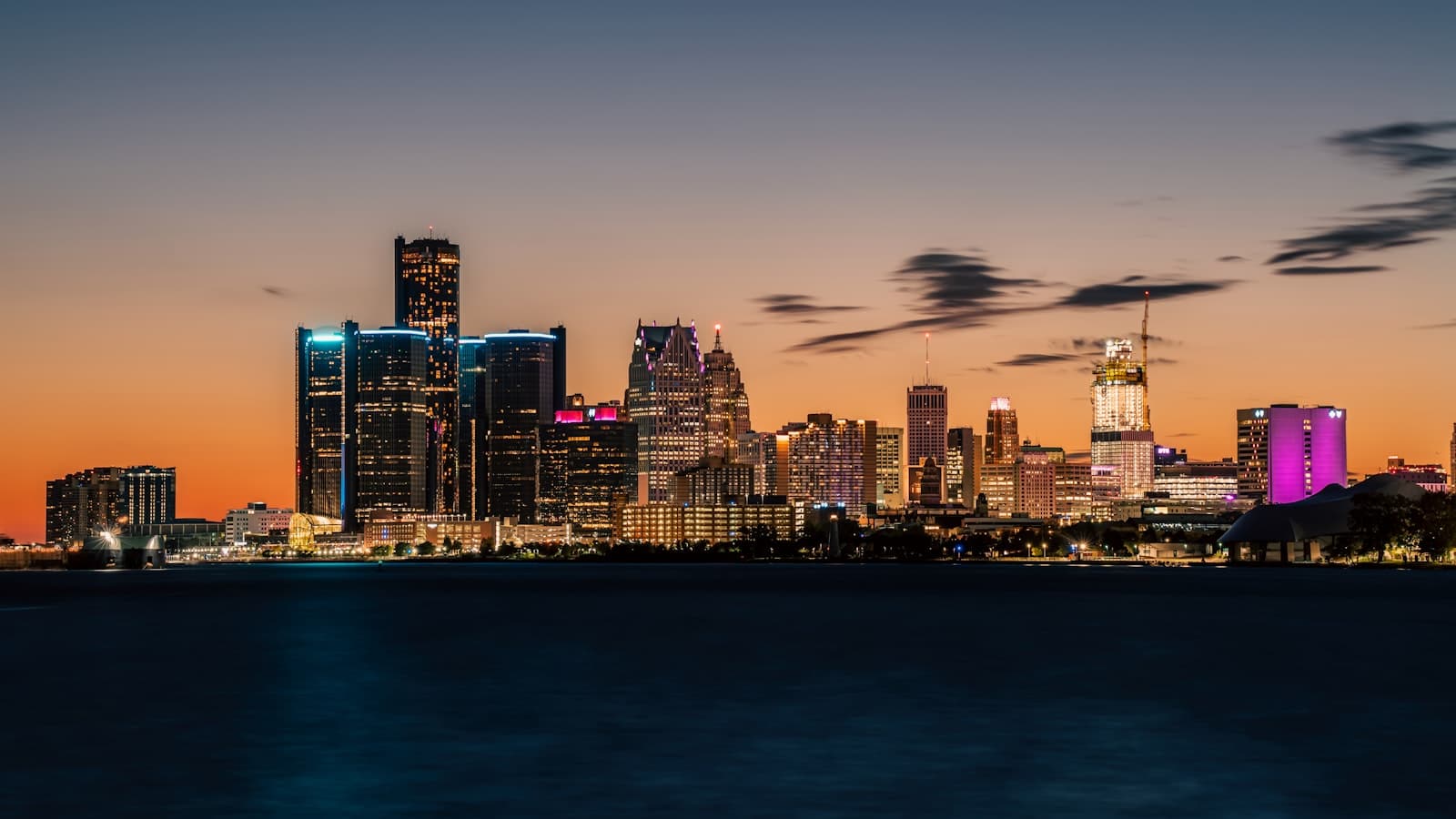
Michigan's economy is defined by its automotive heritage, advanced manufacturing prowess, and vast Great Lakes geography. Harsh winters, unique no-fault auto insurance laws, and industrial legacy risks make Michigan one of the most complex commercial insurance markets in the country.
Takes ~2 minutes · We review your requirements · Coverage matched to your contracts
Operating without proper commercial insurance in Michigan exposes your business to lawsuits, regulatory penalties, and uninsured losses. Michigan's no-fault auto reform (2019) allows businesses to choose PIP coverage levels for commercial vehicles. The state also requires builders to register with the Michigan Department of Licensing and Regulatory Affairs (LARA) and maintain liability insurance for residential construction.

Bobby Friel
Partner, Direct Insurance Services
You know how it is — you're running operations, managing people, watching cash flow, and you don't have time to wonder whether your contracts have ever been read against your active policy line by line. You assume the general liability limit matches what your largest contract requires. You assume the workers' comp classification codes still reflect what your team actually does. You assume the cyber sublimit would cover the ransomware attack your industry is now experiencing. And then a vendor submits a non-compliant COI you can't enforce, or a claim gets denied on a coinsurance penalty, and suddenly you're discovering what the policy actually says.
What we do is map your actual contracts, leases, governing documents, and operational realities to the policy language — before you renew, before a denied claim becomes your problem. On video. So you know exactly how your policy responds.
We bind fast too. As fast as the online quote tools on standard risks. The difference isn't speed — it's that we don't ship coverage with gaps. Is saving 5 to 10 minutes on a generic quote worth gaps that can shut your operation down, drain revenue during a claim dispute, and force cash payouts the policy was supposed to cover?
When was the last time anyone took the time to close your coverage gaps before the bind, not after the claim?
On Video Before Binding
Watch how a real commercial policy review works and how commercial insurance actually responds — before you decide what to bind.
Watch: How commercial insurance actually works
Everything you need to know about commercial coverage — in under 2 minutes.
Watch: A real commercial policy review
Patrick Henigan · Licensed Agent, Direct Insurance Services
Coverage Areas
Each industry has a dedicated Michigan page with state-specific coverage details, cost factors, laws, and FAQs.
Michigan HOAs and condominium associations must comply with the Michigan Condominium Act's insurance provisions while managing snow removal liability, ice dam damage, and Great Lakes coastal erosion in lakefront communities.
Michigan commercial landlords face unique challenges from harsh winters damaging building systems, legacy environmental contamination on industrial properties, and varying market conditions from Detroit to Grand Rapids.
Cyber coverage for healthcare, e-commerce, professional services, and any operation handling customer data or accepting digital payments.
Michigan contractors must manage winter construction shutdowns, freeze-thaw structural challenges, and high workers' compensation costs in a state with demanding building codes for snow load and insulation.
Michigan's restaurant industry, from Detroit's revival dining scene to Grand Rapids' nationally recognized food culture, faces winter slip-and-fall liability, liquor liability, and seasonal staffing challenges.
Don't see your industry? Browse all commercial insurance options
⚠️ Key Risks
The coverage gaps and risk patterns we see most often when reviewing policies for Michigan businesses.
Michigan's lake-effect snow, ice storms, and prolonged sub-zero temperatures cause extensive property damage from roof collapses, frozen pipe bursts, and parking lot slip-and-fall incidents throughout the state.
Michigan's reformed no-fault auto insurance system (post-2019 reforms) still creates some of the most complex and expensive commercial auto coverage in the nation, with unique PIP requirements that affect every business operating vehicles.
Businesses along Michigan's extensive coastline face Great Lakes storm surge, coastal erosion, high-water cycles, and severe wind events that can rival coastal ocean storms in destructive force.
Michigan's manufacturing history has left environmental contamination at many industrial and commercial sites, creating pollution liability exposure for businesses that purchase or lease older industrial properties.
Many Michigan businesses remain tied to the automotive supply chain. An industry downturn or major OEM production cut can cascade through local economies, increasing business interruption and credit risk across entire communities.
Certain areas of Detroit and other legacy industrial cities experience elevated vacancy rates and arson risk, making commercial property underwriting challenging and fire prevention measures critical for insurability.
Cost Overview
| Industry | Top Cost Drivers | Key Cost Driver | Risk Level | |
|---|---|---|---|---|
| Contractors | Trade class, payroll, COI requirements, claims history | Trade type, payroll, COI requirements | Critical | |
| Restaurants | Cuisine type, liquor %, seating, delivery operations | Liquor sales %, seating, late-night hours | Significant | |
| HOA / Condo | Unit count, amenities, claims history, CC&R requirements | Units, construction type, amenities | Notable | |
| Commercial Landlords | Occupancy mix, property age, tenant insurance compliance | Property value, tenant mix, vacancy | Significant | |
| Cyber (Healthcare / E-Com / Tech) | Data sensitivity, revenue, security controls, vendor stack | Industry + data type + controls in place | Critical |
These ranges vary significantly based on your specific business, claims history, and coverage needs. Use our free risk calculators to flag specific coverage gaps — or request a quote to walk through your operation with us.
Risk Calculators
Free risk calculators — no signup, no email required. Pick your industry and identify your gaps in 30 seconds.
Identify your GL, workers comp, and auto coverage gaps by trade.
Identify coverage risks for your restaurant type.
Identify coverage risks for your master policy and D&O by community size.
Identify LRO and liability coverage risks for your building.
Identify ransomware, BI, privacy, and vendor gaps for healthcare / e-commerce / tech.
Coverage We Specialize In
Across the operations we insure, these are the nine coverage types we review most often — sometimes because they're foundational, sometimes because they're frequently missing from standard renewals, and sometimes because they require depth most generalist agencies don't carry. We walk through each one against your specific documents, not against a generic category.
Every commercial lease, general contractor agreement, and lender requirement names a specific liability limit. General liability responds when a third party is injured on your premises, when your work or operations damage someone else's property, or when a claim involving advertising, defamation, or personal injury comes back against the business. It's the foundation most other commercial coverage is built on — and the limit that renewal cycles most commonly carry forward without being measured against what current contracts actually require. We review your active agreements alongside your current policy to confirm the limit your coverage shows matches the limit your contracts demand.
Explore General Liability Coverage →In most of the 29 states we serve, workers' compensation is required by law once you employ anyone. It covers medical expenses, rehabilitation costs, and a portion of lost wages when an employee is injured or becomes ill from work-related activity. Whether you have employees is rarely the question — the question is whether the classification codes assigned to your workers reflect what they actually do on the job. Misclassified roles create gaps that standard policy renewals don't surface. Coverage can be in place and still not respond correctly when the job description doesn't match what's on the dec page (the policy's declarations page). We review your payroll structure and job descriptions alongside your current coverage to confirm every role is classified and covered correctly.
Explore Workers' Compensation →A cyber incident — whether ransomware, a stolen vendor login, or a data breach — triggers costs that most standard commercial policies don't cover: forensic investigation, notification to affected parties, regulatory response, and lost-income coverage during the recovery period. Standalone cyber coverage handles those costs. What it actually pays for depends on the caps inside the policy on specific loss categories — limits that vary significantly from one policy form to another. Most standard commercial packages don't include standalone cyber coverage at all. For any business that processes payments, holds client or member data, or operates a networked system, that gap exists whether or not the renewal cycle surfaced it. We review your current policy alongside your actual digital exposure to confirm where coverage is in place and where it isn't.
Explore Cyber Insurance →Commercial property coverage protects your physical assets — owned or leased buildings, equipment, inventory, and the improvements your business has made to a space — when fire, storm, theft, or equipment breakdown interrupts your operations. The limit that matters is what it would cost to rebuild or replace at today's prices. Policies carried forward through multiple renewal cycles often reflect property values from when the building was last appraised — not current construction costs or the current replacement value of equipment and inventory. We review your property schedules — what's listed, at what value, and under what coverage terms — to confirm the numbers reflect your operation as it actually exists today.
Explore Commercial Property →If a vehicle is used for business — owned by the company, leased, or driven by an employee using their personal car for a work errand — a personal auto policy won't respond when the accident happens on company time. Commercial auto covers the business vehicle and the liability that comes with putting a vehicle on the road in the company's name. The gap most commercial auto renewals miss isn't the owned fleet — it's coverage for employees using their own vehicles for work — sometimes called hired and non-owned auto — that standard commercial auto renewals often don't include by default. We review your vehicle schedule and how your team uses vehicles for work to confirm coverage matches how your operation actually moves.
Explore Commercial Auto →A Business Owner's Policy — commonly called a BOP — bundles general liability and commercial property coverage into a single policy structure. For small to mid-size commercial operations that need both, the bundle simplifies administration and reduces the number of separate policies to track. What the bundle doesn't do on its own: it doesn't verify that the property limits reflect actual replacement values, or that the liability limits match what current leases and contracts require. Consolidated coverage carries the same precision requirements as individual policies. We review your BOP structure against your current lease obligations, contract requirements, and property schedules to confirm the bundle reflects your operation as it stands.
Explore Business Owner's Policy →When a primary policy's limit is exhausted — whether general liability, commercial auto, or workers' compensation — a commercial umbrella extends coverage above it. It raises your total coverage capacity without requiring higher limits on every underlying policy individually. For building owners, HOA boards, contractors, and restaurant operators with real large-loss exposure, the question isn't whether to carry excess coverage. It's whether the current limit was set to match the actual scale of what's now at risk. Most umbrella limits are established at inception and never re-measured as the operation grows or as the risk environment changes. We review your current umbrella structure against your underlying policies and your actual exposure today.
Explore Commercial Umbrella →An HOA master policy is the association's primary property coverage — the policy that responds when shared structures, common areas, and the building envelope sustain damage. What it actually covers depends on whether the policy is structured as "bare walls," "single entity," or "all-in" — three distinct coverage structures with meaningfully different implications for what individual unit owners are responsible for covering on their own. The governing documents set the coverage obligation. The master policy needs to match. Most master policies are renewed from the prior year's dec page (the policy's declarations page) without being read against current governing-document requirements, reserve study findings, or recent structural assessments. We read your governing documents and your master policy together — on video — to confirm the structure and limits reflect what the association is actually responsible for.
Explore HOA Master Policy →Building owner coverage — also written as lessor's risk only (LRO) insurance — is the commercial property and liability structure built specifically for owners of occupied commercial buildings. It covers the building itself, lost rental income if a covered event makes the property unrentable, and the liability exposure that comes with operating a commercial building. What standard property policies often miss: vacancy provisions — policy clauses that restrict or exclude coverage when occupancy drops below a certain threshold — and lease compliance requirements that most standard renewals don't verify against active tenant agreements. We review your lease structures, occupancy history, and current policy terms together to confirm your coverage reflects the building as it's actually operating.
Explore Building Owner Coverage →Our Process
Bobby Friel
Partner, Direct Insurance Services
Our process is designed to get you the right coverage for your Michigan operation — not a generic business owner policy. Here are the 6 steps we walk through together.
Share your operation type, revenue, payroll, and any specific coverage requirements from contracts, lenders, GCs, project owners, governing documents, or vendors. We start with your real situation — not a generic application.
Before we quote, we read the documents that actually determine your real exposure — contracts, leases, governing documents, vendor agreements, certificate requirements. Restaurants get their lease and franchise agreement reviewed. HOAs get their CC&Rs and bylaws reviewed. Landlords get their leases reviewed. Contractors get their subcontract agreements reviewed. Cyber clients get their data-handling commitments reviewed. This is where most agents skip the work.
Your operation goes to the carriers that actually write your vertical at competitive terms — not generalists treating your industry as an add-on to a BOP. We compare coverage, pricing, and claims handling across 30+ A-rated carriers and surplus markets.
We walk you through every option on video — limits, exclusions, what your documents actually require, what is covered, what is not. No PDFs to decipher, no jargon. Just plain English.
Need coverage for a new contract, lease signing, board meeting, or closing? We review your requirements before binding so your coverage clears on the first submission.
Your COIs, endorsement updates, and renewal reviews happen on your timeline, not on a service-ticket queue. Need a certificate at 4pm Friday for a Monday job? Handled.
We're appointed with carriers who write each of our 5 verticals at competitive terms — restaurants, HOAs, commercial landlords, contractors, and cyber. Not generalists treating your operation as an add-on. We compare quotes from multiple A-rated specialty markets to find the policy language that actually responds when you need it.
“I run a snow plow removal business and my old insurance provider dropped my coverage!! They got everything sorted out and I was insured the same day. These guys know how to help, use them!!”
— Jessica K., Google Review
“Helped me get the right coverage for my business and made everything super easy to understand. Bobby was especially great — very friendly, responsive, and genuinely cared about making sure I was taken care of.”
— Michael O., Google Review
“He takes the time to understand your business needs before recommending coverage. You can tell he genuinely cares about his clients and goes the extra mile to make sure everything is handled properly.”
— Jen K., Google Review
“I run a snow plow removal business and my old insurance provider dropped my coverage!! They got everything sorted out and I was insured the same day. These guys know how to help, use them!!”
— Jessica K., Google Review
📝 Helpful to Have
The more we know about your operations, contracts, and exposure profile, the more precisely we can match coverage to your actual risk. Here's what helps — but if you don't have it all, we'll work through it together.
Don't have everything? No problem — start the form and we'll review what we need together.
What Changes When We Read First
Michigan commercial operators who choose to have their coverage reviewed first — before binding, before renewal, before a claim — see real changes in how their commercial insurance program performs. Here's what looks different six months in.
Frequently Asked
Commercial Insurance in Michigan
Four angles on what shapes commercial insurance for Michigan operators — landscape, laws, realities, and cost drivers.
Michigan's commercial insurance market spans three distinct economic profiles: the Detroit metro's automotive industry, manufacturing, and commercial real estate concentration; Ann Arbor and the Southeast Michigan technology and university corridor; and West Michigan's Grand Rapids manufacturing, healthcare, and growing commercial market.
HOA associations governed under the Michigan Condominium Act cover communities ranging from Detroit's suburban condominium developments in Oakland and Macomb Counties to urban condominium associations in Detroit's downtown and Midtown redevelopment corridor and Ann Arbor's university-adjacent condominium market. Michigan's automotive and manufacturing industry concentration creates distinct building owner and commercial tenant insurance profiles — industrial and manufacturing tenant mixes carry data-handling, equipment breakdown, and product liability adjacencies that standard commercial office-building owner programs weren't written to address.
The Michigan Liquor Control Commission (MLCC) licensing framework and Michigan's Dram Shop Act create a restaurant and bar liquor liability environment that carriers approach as a distinct Michigan-specific exposure — the Dram Shop Act's recovery framework allows third parties to seek recovery for both property damage and personal injury from establishments that served alcohol to obviously intoxicated individuals. Contractor operations run under the Michigan Department of Licensing and Regulatory Affairs (LARA) and MIOSHA's active enforcement environment, with workers' compensation costs that reflect Michigan's manufacturing industry baseline and MIOSHA's enforcement posture. Great Lakes weather patterns — lake-effect snow, severe convective storms, and flooding along Michigan's river and shoreline corridors — shape commercial property loss patterns across both peninsulas.
MCL 559.101 et seq. (Michigan Condominium Act) establishes the governance framework, reserve fund obligations, and master policy requirements for condominium associations statewide. The Act's insurance requirements specify coverage for common elements — the definition of what's a common element versus unit-owner responsibility is a recurring coverage gap in Michigan condominium associations whose governing documents haven't been reviewed against the current master policy structure.
MCL 436.1801 et seq. (Michigan Liquor Control Code, administered by the Michigan Liquor Control Commission — MLCC) governs restaurant and bar licensing and establishes the Michigan Dram Shop Act's liability framework. Michigan's Dram Shop Act allows injured third parties to seek recovery against a licensed establishment that sold or furnished alcohol to a person who was visibly intoxicated at the time of service. The recovery framework covers property damage and personal injury — carrier underwriting for Michigan restaurant and bar liquor liability prices this exposure profile specifically.
MCL 408.1001 et seq. (Michigan Occupational Safety and Health Act — MIOSHA) establishes Michigan's state-plan occupational safety enforcement program. Michigan operates under a federally approved state plan — meaning MIOSHA standards and enforcement priorities apply on most Michigan job sites rather than federal OSHA defaults. Contractor workers' compensation programs for Michigan operations reflect MIOSHA's enforcement environment and the manufacturing-adjacent safety standards that Michigan's industrial economy has shaped.
MCL 418.101 et seq. (Michigan Workers' Disability Compensation Act) establishes mandatory workers' compensation coverage for Michigan employers. Michigan's WC system includes specific provisions for occupational disease claims that reflect the state's manufacturing and industrial work history — classification code accuracy and experience modification rates are the primary premium drivers for Michigan contractor and employer operations.
Michigan commercial operators face a weather-driven loss environment shaped by Great Lakes geography, a manufacturing-economy insurance profile that differs from most of the country, and a liquor liability framework that creates specific exposure for the state's restaurant and hospitality sector.
Great Lakes weather patterns create lake-effect snow events — concentrated on the western Lower Peninsula's Lakeshore communities and the Upper Peninsula's snow-belt regions — that drive commercial property and fleet loss patterns at frequencies and intensities that aren't present in inland markets. Severe convective storms along Michigan's river corridors and the Saginaw Bay and Lake Erie shorelines create flooding exposure that both commercial property and HOA master policy carriers weigh in Michigan specifically.
Michigan's automotive and manufacturing industry concentration creates a building owner and commercial tenant profile that standard general commercial property programs weren't designed for. Building owners managing manufacturing and automotive-supplier tenant profiles carry equipment breakdown, industrial-process, and data-handling adjacencies that require policy endorsements or specialty programs that a standard commercial building-owner policy doesn't include.
Detroit's downtown and Midtown commercial redevelopment corridor has created an active mixed-use construction and renovation market — contractor operations in the urban core face both MIOSHA's enforcement environment and the project-specific exposures of historic structure renovation that standard new-construction contractor programs don't fully address. West Michigan's Grand Rapids healthcare and manufacturing market creates distinct workers' compensation and employer liability profiles that MIOSHA's state-plan enforcement environment shapes specifically.
Michigan commercial premium drivers reflect the state's manufacturing-economy baseline, Great Lakes weather exposure, and the MLCC Dram Shop Act's liability framework for restaurant and bar operations.
For HOA associations, Michigan Condominium Act compliance and governing-document precision are the primary master policy and D&O underwriting factors. The Act's common-element definition drives the master policy scope — associations whose governing documents haven't been reviewed against the current policy structure may carry coverage definition gaps that surface at claim time. Detroit's urban condominium market carries building-age and construction-vintage factors that newer suburban associations don't produce.
Michigan restaurant and bar liquor liability premiums reflect the Dram Shop Act's broad recovery framework. Carriers price Michigan dram shop exposure as a distinct factor compared to states with narrower liability structures — the combination of property-damage and personal-injury recovery available under Michigan's framework, along with MLCC license class and alcohol sales concentration, are the primary liquor liability underwriting variables for Michigan restaurant operations.
Contractor workers' compensation pricing in Michigan reflects MIOSHA's active enforcement environment and the manufacturing-adjacent safety standards that create higher-than-average injury frequency baselines in certain trades. Experience modification rates drive premium above or below the state-level baseline — and Michigan contractor operations with recent MIOSHA citations or WC claims history face compounding renewal-cycle cost impact.
Commercial property pricing for Michigan's Great Lakes shoreline and river-corridor operations reflects lake-effect weather patterns, flood zone proximity, and the building-age profiles of Michigan's older manufacturing and commercial building stock. Building owners who haven't updated property schedules against current Michigan construction replacement costs face underinsurance gaps that Great Lakes weather events expose directly.
Michigan A-Rated Carrier Relationships
We shop your Michigan commercial insurance program across 12+ A-rated specialty markets to match your operation to the right paper.







Plus additional specialty markets across our 29-state service area.
🗺️ Multi-Market Reach
HOA associations in Detroit's urban condominium market and Michigan's suburban Condominium Act communities face carrier appetite shaped by governing-document precision, building age, and common-element definition clarity. Restaurant and bar operators under Michigan's Dram Shop Act need liquor liability coverage structured for the Act's property-damage and personal-injury recovery framework — not a generic Midwest dram shop form. Contractor operations under MIOSHA's state-plan enforcement and building owners managing automotive and manufacturing tenant profiles each need coverage matched to Michigan's distinct industrial-economy profile. We shop your governing documents, lease structures, MLCC license classification, and subcontract requirements across multiple carriers — so your Michigan operation matches the state's framework and your actual risk profile.
Regulatory Snapshot
Key regulatory frameworks shaping commercial insurance for Michigan operators.
The Michigan Department of Insurance and Financial Services (DIFS) regulates all insurance activities in the state, including rate approvals, producer licensing, and consumer protection.
Michigan Insurance Code (MCL 500.100 et seq.) governs insurance. Michigan's no-fault auto law (MCL 500.3101 et seq.), reformed in 2019, requires unique PIP coverage structures. The Uniform Trade Practices Act (MCL 500.2001 et seq.) regulates claims handling. Commercial auto minimums are 20/40/10 plus mandatory PIP.
Michigan requires workers' compensation for employers with one or more employees, with limited exceptions for some agricultural and domestic workers. Coverage is available through private carriers. Michigan does not operate a state fund, and the Workers' Disability Compensation Agency oversees the system.
Michigan's no-fault auto reform (2019) allows businesses to choose PIP coverage levels for commercial vehicles. The state also requires builders to register with the Michigan Department of Licensing and Regulatory Affairs (LARA) and maintain liability insurance for residential construction.
Business Climate
Michigan remains the global center of the automotive industry, with the headquarters of General Motors, Ford Motor Company, and Stellantis (formerly Chrysler) all located in metro Detroit. The state's automotive ecosystem extends to hundreds of Tier 1 and Tier 2 suppliers, engineering firms, and autonomous vehicle technology companies concentrated in the Ann Arbor-to-Detroit corridor. The Big Three's electric vehicle transition is driving billions in new battery plant and assembly facility investments across the state.
Grand Rapids, Michigan's second-largest metro, has diversified into healthcare (Spectrum Health/Corewell), office furniture manufacturing (Steelcase, Herman Miller), and a nationally recognized craft beer and food scene. The city consistently ranks among the best mid-sized cities for business. Other key economic centers include Kalamazoo (pharmaceuticals with Zoetis and Stryker), Traverse City (wine, tourism, and tech startups), and Lansing (state government and Michigan State University).
Michigan's geography encompasses over 3,000 miles of Great Lakes shoreline, supporting a significant tourism economy across the Upper Peninsula, Mackinac Island, and the Lake Michigan coastal communities. Agriculture is substantial, with Michigan ranking in the top five nationally for blueberries, tart cherries, dry beans, and nursery crops. The state's manufacturing base has evolved beyond automotive to include aerospace, defense, and life sciences.
National Footprint
We provide commercial insurance review across 29 service states.
We work with 30+ A-rated carriers to find the right coverage for Michigan businesses. Start your quote online — it takes about 2 minutes.